


The foundry industry is facing a structural turning point. M is becoming a tool for continuation, specialization and responsible transfer.
The foundry industry is one of the main pillars of industrial manufacturing - and at the same time one of the industries that is currently under considerable pressure to transform. The decline of the classic combustion engine, the relocation of value chains, high energy costs, regulatory requirements and the increasing shortage of skilled workers are fundamentally changing the prospects for many companies.
While demand and material requirements are shifting, the demands on process reliability, environmental standards and digitization are also increasing. Medium-sized foundries in particular - often family-owned and regionally rooted - are faced with the question: invest, specialize, cooperate - or hand over to good hands? A forward-looking transition is becoming a crucial element for future viability.
starkpartners has been supporting owner-managed foundries, mold makers and metal processing companies through change processes for many years. Whether aluminum, iron, steel or zinc casting, whether manual molding, machine molding, die casting or investment casting - we know the special features of this often underestimated but highly specialized industry.
We understand the complexity of the manufacturing processes, the business challenges in series production, retrofitting and reject rates, the technical depth of core shooting machines, sand preparation and post-processing, and the importance of customer loyalty in the OEM and supplier business. Our clients appreciate our eye for what is technically feasible and what is humanly necessary - even across generations.
The M market in the foundry industry is selective but active. Strategic buyers - for example from automotive suppliers, mechanical engineering or related finishing areas - are specifically looking for specialized manufacturing expertise, available capacity and location advantages. Private equity investors are also showing selective interest, especially in technically differentiated suppliers with a high level of in-house production and stable series utilization.
Today, what matters is not just size, but the ability to assert oneself in an environment of falling unit numbers and increasing individualization. Companies that score points through material expertise, small series competence, casting simulation or their own tool production can clearly position themselves. M is not understood as a pure exit, but increasingly as a strategic means of bundling strengths - technologically, in terms of personnel and regionally.
Discuss perspectives for your life's work - confidentially
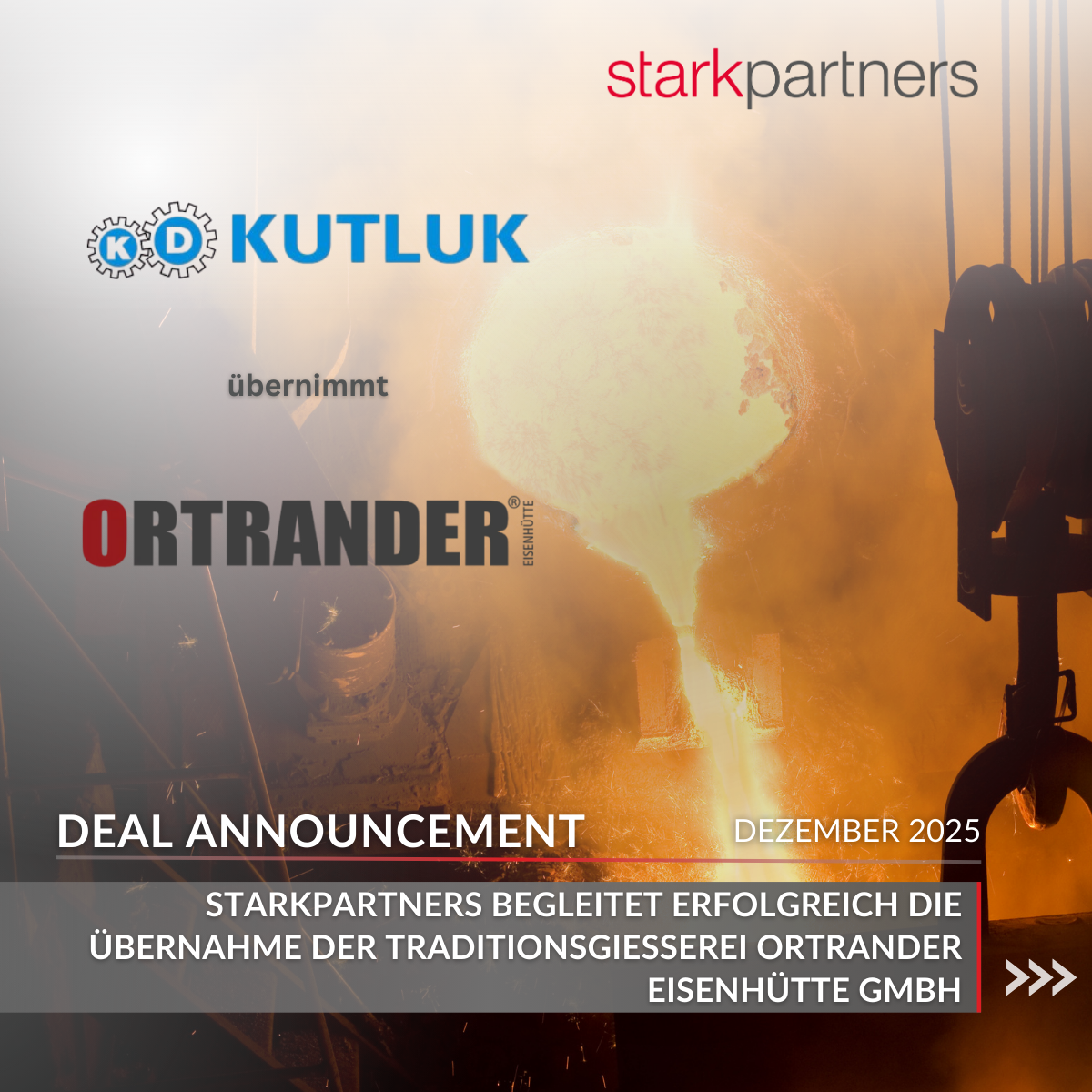
Successfully implemented M mandates
We are Focused on Medium-Sized Companies in Transformation and Special Situations



What is your company worth?
Receive an initial indicative valuation – simple, confidential and specially tailored to medium-sized companies.